Showing posts with label hospitality. Show all posts

August 30, 2013

Goodbye, Grand Rapids


Tonight is the last night I will sleep in my apartment in Grand Rapids.  For the foreseeable future, it is the last night I will stay in GR as a resident, and not someone’s guest.  This is a sad night for me.  This is the place I became an adult.  I have lived here for 3/4 of my adult life.  I went to Calvin College here.  I went to Calvin Theological Seminary here.  I had my first call at Church of the Servant here.  Living in Grand Rapids has shaped me in so many ways. 
People love to hate Grand Rapids; some call it “bland rapids.”  It is not as big or as cosmopolitan as New York or Chicago.  But Grand Rapids has its own charm.  There are lots of wonderful places and things to do in Grand Rapids.  Let me share a few of my favorites with you:
And of course, the people are such an important part of Grand Rapids and my experience here.  Professors and friends from Calvin College.  Professors, staff, and students at Calvin Seminary, where I was enfolded into community.  Other wonderful friends that I made during my seminary days.  Colleagues and congregants at Church of the Servant.  I wouldn’t be who I am without all of you all.
I don’t know where I am going to land in the future, but I am thankful for the ways Grand Rapids has shaped me, and I am excited to take that with me to my unknown destination.  Thanks, Grand Rapids.  Its been great!  

August 04, 2013

Sunday Afternoon Prayer: We Are Your Children

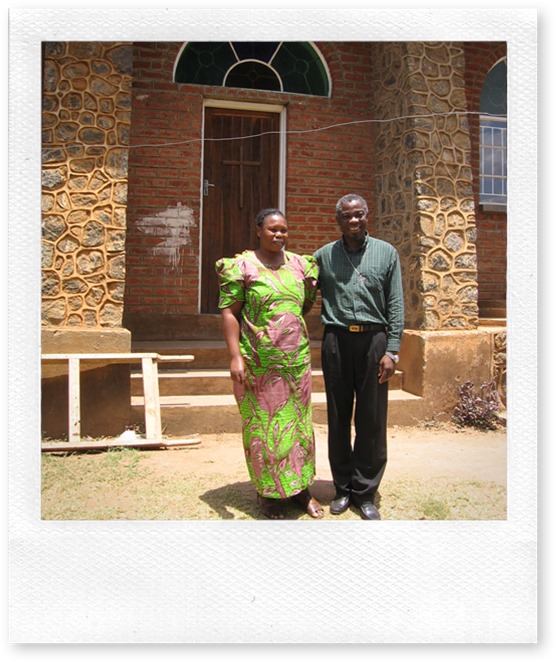
Today’s prayer also comes from An African Prayer BookIt is a prayer from our brothers and sisters of the the Anglican Church of the Province of Southern Africa.  It is a wide-ranging prayer that covers many topics, and I am going to use an adapted version of it in a worship service I am leading tonight.  I am looking forward to leading Christian Reformed folks in Michigan in prayer using words from the Anglican Church in Africa.
63206513_f0f54fdc76_oFather, we are your children, your Spirit lives in us and we are in your Spirit: hear us, for it is your Spirit who speaks through us as we pray.
Lord hear us.
Father, you created the heavens and the earth: bless the produce of our land and the works of our hands.
Lord hear us.
Father, you created us in your own image: teach us to honor you in all your children.
Lord hear us.
Father, in your steadfast love you provide for your creation: grant good rains for our crops.
Lord hear us.
Father, you inspired the prophets of old: grant that your Church may faithfully proclaim your truth to the world.
Lord hear us.
Father, you sent your Son into the world: reveal him to others through his life in us.
Lord hear us.
Lord Jesus, you sent your apostles to make disciples of all nations: bless the bishops of this province, especially N our bishop, together with N our metropolitan, and all ministers of your Church.
Christ hear us.
Lord Jesus, for your sake men and women forsook all and followed you: call many to serve you in religious communities and in the ordained ministry of your Church.
Christ hear us.
Lord Jesus, you called your disciples to take up the cross: deepen in us a sense of vocation.
Christ hear us.
You prayed for your Church to be one: unite all Christians that the world may believe.
Christ hear us.
You forgave the thief on the cross: bring us all to penitence and reconciliation.
Christ hear us.
You broke down the walls that divide us: bring the people of this world to live in peace and concord.
Christ hear us.
You taught us through Paul, your apostle, to pray for kings and rulers: bless and guide all who are in authority.
Christ hear us.
You were rich yet for our sake became poor: move those who have wealth to share generously with those who are poor.
Christ hear us.
You sat among the learned, listening and asking them questions: inspire all who teach and all who learn.
Christ hear us.
You cured by your healing touch and word: heal the sick and bless those who minister to them.
Christ hear us.
You were unjustly condemned by Pontius Pilate: strengthen our brothers and sisters who are suffering injustice and persecution.
Christ hear us.
You lived as an exile in Egypt: protect and comfort all refugees.
Christ hear us.
You knew the love and care of an earthly home: be with migrant workers and protect their families.
Christ hear us.
You open and none can shut: open the gates of your kingdom to those who have died without hearing your gospel.
Christ hear us.
You have been glorified in the lives of innumerable saints: give us strength through their prayers to follow in their footsteps.
Christ hear us.
Father we know that you are good and that you hear those who call upon you: give to us and to all people what is best for us, that we may glorify you through your Son, Jesus Christ our Lord, who is alive and reigns with you and the Holy Spirit, one God, now and forever.
Amen.


From “An Anglican Prayer Book 1989, Church of the Province of Southern Africa” in An African Prayer Book, Selected and with Introductions by Desmond Tutu, Image/Doubleday New York, 1995.
 
Photo of an Anglican pastor in Liongwe, Malawi by khym54, used under a Creative Commons License.

July 28, 2013

Sunday Afternoon Prayers: For a Bittersweet Day

Today is bittersweet.  It was my last Sunday morning with my congregation.  I am so thankful for these two years, and it is so hard to say goodbye.  And so today I offer two prayers.  Both of these prayers originate in Africa and came to me in An African Prayer Book.


My prayer of thanksgiving, for the people I have had the opportunity to know from around the world and for the ways that they have shown that church can be like a big family.

Our Churches Are Like Big Families

Lord, we thank you that our churches are like big families.
Lord, let your spirit of reconciliation blow over all the earth.
Let Christians live in your love.
Lord, we praise you in Europe's cathedrals, in America's offerings, 
And in our African songs of praise.
Lord, we thank you that we have brothers and sisters in all the world.
Be with them that make peace.
Amen. (West Africa, pg. 65-66).

And my prayer for the people that I am leaving, that God will continue to be at work in and through them and will continue to hold them in the palm of his hand.

The Privilege Is Ours To Share In the Loving

Almighty God, our heavenly Father, the privilege is ours to share in the loving, healing, reconciling mission of your Son Jesus Christ, our Lord, in this age and wherever we are.  Since without you we can do no good thing.
     May your Spirit make us wise;
     May your Spirit guide us;
     May your Spirit renew us;
     May your Spirit strengthen us;
So that we will be:
     Strong in faith,
     Discerning in proclamation,
     Courageous in witness,
     Persistent in good deeds.
This we ask through the name of the Father.
(Church of the Province of the West Indies, pg. 96-97)


Prayers from An African Prayerbook, selected and with an introduction by Desmond Tutu, Image/Doubleday books, 1995.
Photo by John Flanigan, http://www.flickr.com/photos/82369865@N00/5414528258/in/photolist-9fsSBu, used under a Creative Commons License

July 22, 2013

A Prayer for My Office

As you may know, my current pastoral call is coming to an end soon.  I am a Resident Pastor, which is a two year first call.  Those two years will finish at the end of the month.  This morning, at the start of my last full week in my office, this is my prayer.


Gracious God,

Thank you for this office.

Thank you for the books that line the shelves and the wisdom they've shared with me.
Thank you for the pictures that remind me of people and events that have shaped my life.
Thank you for the children's art inspired by my sermons, reminding me they are listening, too.
Thank you for the table and chairs where I've had so many conversations.
Thank you for the robe and stoles and your call to serve the Church as an ordained minister.

Thank you for this place to pray, study, talk, cry, think, and serve.


As I box it all up soon, I pray for the place I'll unpack it.

I don't know where that is yet, but you do.
Show me where it is.  And help me to wait patiently in the meantime.
Help my new congregation to wait, too.  
Guide our steps as we get to know each other.  

This room will be empty for a day or two, waiting for the new occupant to move in.

Bless him and his ministry here.
May this place and the people here be as much of a blessing to him as they've been to me.

In the name of the Father, Son, and Holy Spirit.  Amen.  

June 23, 2013

Sunday Afternoon Prayer: A Prayer for Summer

Summer just officially arrived this weekend in the Northern Hemisphere, and today kicks off my church's summer worship schedule (which allows a bit more time for people to get to know others who usually attend different services).  And so today, a prayer for the beginning of summer.

Thank you, God, for summer,
For the warmth of the sun,
The power of thunderstorms,
The many shades and hues of green,
The bounty of the earth.

Thank you, God, for the feelings of summer:
Freedom,
Expansiveness,
Openness,
Adventure.

Help us, gracious and hospitable God,
To use these gifts of summer to bless others.
May we use the freedom we find in our schedules to build relationships with others,
May we extend the expansive feeling, inviting people who are different than us into our lives.
May we have a special openness to others and to what you might do in us and through us.
May we be adventurous--following the Spirit's leading outside of our comfort zone.

God of Life--rich, abundant life--
Give us your abundant life in this season of abundance.
Give us life to the full because we have been transformed by you.

In the name of the Father, Son, and Holy Spirit.  Amen.


Personal photo, June 2013.

May 14, 2013

Grains of Hope

“We have, what do you call it, a small bit of wheat at the end of stalk, a grain.  We have what you would call, grains of hope.  When I face, when I am in darkness, even there when I am beaten and tortured every day, I have hope.  I do not stop.  That is what keep me alive.” 

These words came from the lips of a man who came as a refugee to Grand Rapids, and they became the title of the play Grains of Hope.  Grains of Hope is an ethnographic play created by Stephanie Sandberg and the Calvin Theater Company.  Stephanie and Calvin students interviewed over 100 people in West Michigan who came here as refugees or work closely with refugees.  From those interviews, she chose 7 stories—7 people—to feature at the center of the play.   An 18 year old woman who came to Grand Rapids from Vietnam with her family when she was three years old.  A man who fled Sudan as a child and when he eventually came to Grand Rapids, all he knew of America was Mickey Mouse printed on a t-shirt.  A Bhutanese man who spent 15 years of his life living in a refugee camp in Nepal in a simple bamboo house with dirt floors.  In the play, actors brought each of these characters to life using their own words from the interviews.  

They told of how they came to be in Grand Rapids and what they have faced since they arrived.  Stories of the difficulties of learning English and finding work.  They told stories of struggles to find good and affordable housing.  And they told stories of friendship and the people who have helped them along the way--middle school teachers, caseworkers, and doctors, an English tutor who became a friend, an older woman who became a family’s adopted mother and grandmother.

This play was performed 13 times in various locations around Grand Rapids over the last few weeks.  My congregation was privileged to host one of the performances last Sunday evening.  We have been active in working with refugees for many years, and several of the people who appeared in the play were members of our church who have developed relationships with families who came as refugees.  It was moving to see their dedication over the years brought to life. 
An actress telling the story of a woman who came from the DR Congo
As I watched the play, there were points where I was almost in tears at the stories.  Even the people who I don’t know personally have elements of their stories that are similar to stories I have heard from people that I know.  These are people that have welcomed me into their homes with various kinds of chai, fruit, and other snacks.  Who seem glad to have me there, even if much of the conversation around me is in a language that I don’t understand.  Who have loved me and prayed for my mom when she had surgery last winter.  They are people who have come through horrific circumstances to a new life in America.  And that life isn’t necessarily easier—safer and with a higher material standard of living, perhaps—but with the new challenges of DHS who cuts benefits (like food stamps) if you miss a letter or appointment, a mind-bogglingly complex medical system, and a culture that is independent to the extreme. 

I am so inspired by the people I know who arrived here as refugees.  I have seen Christ in them, again and again.  I am thankful for the opportunity to get to know so many of them in the past few years.  I have seen their hope, even in midst of despair.  I hope some of that has rubbed off on me.  And I hope that I and churches across North America would offer the friendship that gives hope to dealing with the transitions.  I pray that we would reflect Christ to our friends, because Jesus is the source of true hope.


Resources:


Wheat photo by Marilylle Soveran, http://www.flickr.com/photos/86953562@N00/47812279/, used under a Creative Commons License.
Play photo from Calvin College publicity, http://www.calvin.edu/news/archive/grains-of-hope

May 07, 2013

People of the Book and My Neighborhood Mosque


I recently read the novel People of the Book by Pulitzer Prize winning author Geraldine Brooks.  It tells to story of the Sarajevo Haggadah, an illustrated Haggadah (liturgy book for the Jewish Passover) that was created in Spain in the 14th century.  It escaped Spain during the Spanish Inquisition, survived Catholic censors in Vienna in the 17th century, and was rescued from underneath the Nazis in Sarajevo. 

Brooks took the historical outline of this special object and imagined how it made the journey.  Working back through history she created characters that interacted with the book—a Muslim librarian in Sarajevo, an alcoholic priest and his gambling rabbi friend, a young Muslim woman who became a slave for a Jewish doctor.  I actually don’t usually like books as complicated as this one.  Some chapters are a modern day story moving chronologically about the conservation of this special book.  In between those chapters are the chapters that describe each stop, and then move in reverse chronological order.  Each of those chapters is in a new time and place with a new set of characters to get to know.  And for this book, it works.  I was drawn into the story—the story moving forward and the individual stories moving backwards.

One of the questions or themes of this book are how people of different religions get along, or don’t get along, as often happens.  The novel is populated by “people of the book”—Jews, Christians, and Muslims.  Through the centuries, people of all three religions create, move, and preserve the haggadah.  But it usually comes in times of persecution, when people of one religion are in power and oppressing the others.  Christians censor books of other faiths in seventeenth century Venice.  A Muslim ruler captures a Christian woman and forces her to become his wife in fifteenth century Seville.  There are moments of beauty and depravity by people of all three religions. 

It is a long standing question: how do we relate to people of other faiths?  People of faith generally hold their beliefs strongly and that causes conflict.  We see it played out through the history books and browsing the news today.  And when faith gets combined with power—particularly political or economic power—things get messy.  I can only speak as a Christian, and we have made some terrible mistakes.  Those mistakes have brought dishonor to the name of Jesus, who came to bring shalom (peace, wholeness) to the world. 

I want to be part of bringing that shalom to the world, and that means both not perpetrating violence or harm to others, but also speaking the name of Jesus who brings peace.  Easier said than done.  I hear stories of people who have had to flee their homeland because of religious differences.  I walk by the mosques in my neighborhood and am curious about the people that worship in them, but I don’t know many of them.  And so I pray, may I be an instrument of peace.  May people of all backgrounds find shalom in Jesus Christ, where true peace is found.  And may all followers of Jesus bring peace and not violence of any sort.  


May 05, 2013

Sunday Afternoon Prayer: A Prayer for Those Who are Lonely

I met a profoundly lonely woman this week.  This is my prayer for her, and for all others who feel alone.

 God of the Broken-Hearted,

There are so many people who are lonely in this world.
Left behind after the death of their husband or wife.
Wishing that they had children to care for them as they age.
Devastated after a marriage disintegrated.
Missing friends who had to move away.
Unable to sustain friendships.
Forced to leave homeland and family to flee for their lives.
Feeling alone in the midst of a crowd.


Jesus, you know this feeling.
You cried out from the cross, “My God, my God, why have you forsaken me?”


My God, my God, why have you forsaken me?

To each person who feels you have forsaken them,
Show up in a profound way.
May they know you as Emmanuel, God-with-them.
God-with-them when they sit in their apartment alone.
God-with-them when the tears pour down their face.
God-with-them as they wonder if this will ever end.

God, work through your people, the body of Christ, the church. 
Inspire your people to go out of their way to find the lonely-hearted.
Give them time and patience to walk with them through dark valleys.
May the body of Christ become our new family,
A place of trust, where the lonely find solace,
Where they met you.

In Jesus’, our Emmanuel's name.
Amen.


Photo by Dino ahmad ali,  http://www.flickr.com/photos/dinoowww/4125584110/.  Used under a Creative Commons License


May 03, 2013

Singleness is Sanctifying, Too


I’ve often heard that marriage is sanctification.  Sanctification is the theological word for becoming holy or becoming like Christ.  In a good marriage, people learn about themselves and getting along with others.  There is no denying God uses marriage to help people grow in their faith and become more Christ-like.  The problem is that every time we say this, it implies that you can’t really be sanctified if you aren’t married.  It reinforces the notion that serving God as a married person is better than serving God as a single person. 

Sanctification does not require marriage.  There are many ways that God sanctifies us.  Even more, marriage is not necessarily a better or quicker way to sanctification.  In fact, singleness can be part of sanctification, too.  Being single is a different training ground, but I truly believe it too can be fertile soil for becoming Christ-like.    


 One area of fertile soil is identity and trust.  Without another person, I am forced to deepen my identity in Christ.  I am not tempted to think that my boyfriend or husband is able to complete me.  I am who I am not because of my relationship status or who I am connected to.  I am a baptized daughter of God.  This is true of all of us who are in Christ, but being single takes away a temptation to find identity elsewhere. 

I have learned to trust God in different ways than if I was married.  I don’t have another person to rely on.  If I don’t have a job, there is no one else to support me.  If I have a stressful meeting, no one is waiting at home to comfort me.  If I need to make a decision, there is no one to help make the decision.  Instead, I live by faith.  I am learning to trust that God will provide for my needs.  I am learning to trust that God hears my prayers and binds up my broken heart.  I am learning to trust that God leads me and guides me in decision making.  Being single is fertile soil for sanctification in trust.     

This might sound counter-intuitive, but I have found being single to be a place to learn about community and hospitality.  You have to be intentional about developing community, when you don’t have built-in community with your spouse (although I would argue you still need to develop community with others when you’re married).  It takes work to maintain relationships.  There’s a learning curve to relationships—I have had to learn how to be vulnerable and let others in.  But those relationships can be sweet, friends that are family.  They are a community that has walked through some dark valleys, empty desserts, and sun-filled meadows with me.  I am better at all of the one-anothers we find in scripture because of this community.
 
The really awesome empty tomb cake my mom made for our Easter celebration!
Being single is also an opportunity to offer hospitality to others.  Before even offering hospitality, being single has given me a different insight into what it is like to be at the margins.  I don’t fit into what society expects, and it has made me more conscious of other people who might be feeling a bit out of place.  I want my life to be one that welcomes people in and gives them a place to feel at home.  What I desire to offer isn’t the stereotype of hospitality: dinner parties for couples or huge family dinners.  There is freedom associated with singleness and the type of hospitality I can offer.  I don’t have to figure out which family I’m going to spend holidays with.  This year, my parents came to celebrate Thanksgiving at my apartment with some of the refugees I work with.  At Easter, I took a family to my parents’ house for dinner.  I still have lots to learn (sanctification is a process, after all), but it is definitely a way that God is forming me.   

Getting married is not the only way to become sanctified.  There are plenty of sanctifying experiences and situations that come along with being single.  And so for all of us—whether married or single—my prayer is that we will “grow in every way more and more like Christ, who is the head of his body, the church” (Ephesians 4:15, NLT).


Personal photos taken on Iona, Scotland and at my parents' house in Michigan, taken in January and March 2013.

April 09, 2013

New Lines to Womanhood


I recently read a review of the award-winning HBO show Girls in the April 2013 issue of Christianity Today.  The show focuses on an early 20s woman named Hannah as she tries to figure out adulthood—jobs, renting, friends, boyfriends.  It is a coming-of-age show, written and directed by 26-year-old Lena Dunham.  “What’s new about the show is that these women, like many real-life ones, are working from a rough script.  The lines that signal ‘womanhood’ are absent, coming later or not at all, or look quite different from the lines our mothers followed” (pg. 70). 

Like the author of the review, Katelyn Beaty, I also fit into the category of real-life women working from a rough script.  When I was younger, I assumed that I would follow those traditional lines to womanhood: I would meet a nice Christian guy (probably in college), get married shortly after college, buy a house (unless we were missionaries living overseas), and have kids.  I would work before the kids were born and maybe part-time after.


None of that has happened in my life, so far.

I don’t regret my life—it has been full of unique experiences I would have never had if my 13-year-old-self’s life plan had come to fruition.  But at the same time, I have had to figure out new lines to womanhood.  Maybe I should say I am trying to figure out new lines to womanhood.  One day at a time, I am living the life God has called me to and trying to find the lines.

To be honest, it can be a lonely and confusing place.  I don’t have that many role models.  There are portrayals in the media, Girls and Liz Lemon in 30 Rock come to mind, but TV show characters tend to hop from boyfriend to boyfriend, sleeping with them all.  That isn’t part of my life, but the church is a part of my life.  The church gives me stability when everything around me seems to be changing.  The church gives me a community of people who love and care for me, but also don’t quite know what to do with me.    

That’s why I am writing this.  So far in my life I have kept my experiences and feelings about being single pretty private.  I’ve only let the closest circle of my friends in.  But that needs to change, so I am going to be writing more about this part of my life in the future.  I hope to write about the joys, the sorrows, the practices I find helpful, and the habits that are unhelpful.

By sharing my story, I want the 12-year-old girls and boys in my congregation to see what life looks like if you don’t marry early.  I want the 22-year-old woman who just graduated without her Mrs. Degree to have hope that God has beautiful plans for her life even if they feel unconventional.  I want the 45-year-old married pastor to have a glimpse of what it looks like to be in this space and how he or she can be hospitable to people who don’t fit the mold.  I want the 60 year-old who never married to have the permission to tell his or her story, too.  

I want the church to warmly welcome people into community, no matter who they are.  Beaty asks “Are our churches places where women like Dunham can know and be known?  Where their ambitions and dreams are encouraged, not squelched or made to fit into old scripts of womanhood that don’t speak to them?  Where a story is told and retold that speaks to their deepest desires and orients them toward wholeness and self-giving instead of self-gazing?” (pg. 71).  I hope and pray that sharing more of my story can help the church to be such a place.  I hope that together we can develop and affirm many paths to adulthood. 


Top photo by Wally Gobetz, used under a Creative Commons License.  http://www.flickr.com/photos/wallyg/8416119593/.
Bottom photo is a personal photo taken August 2012.

April 07, 2013

Sunday Afternoon Prayer: A Prayer for the Year to Come


I'm continuing the birthday theme for one last post (previous here and here), with my prayer for the coming year of my life.


Thank you for your faithfulness in the past year,
For grace in difficult situations,
For growth as a pastor
For relationships that have supported me.

And in this year to come, may I be a person of
Strength,
Joy,
Stability, and
Hospitality.

May I grow in my
relationship with you,
prayer life,
memorized scripture, and
identity in Christ.

May I live in community with friends
Near,
Far,
Old, and
New.

May I serve you
Faithfully,
With wisdom,
With self-less love for others, and
Wherever you call me.

May I be filled with joy
Exploring your creation,
Creating beautiful things,
Laughing with friends,
And trying new things.

Whether in word or in deed,
Be done in the name of Jesus.

In Jesus’ name.  Amen.


Personal photo taken in the Iona Abbey, Iona, Scotland, January 2013. 


April 06, 2013

Birthday Gift to Myself

This year for my birthday, I took myself on a little vacation.  I went to Ludington, a lovely little town on Lake Michigan with a great state park.  I stayed at the Abbey Lynn Inn, which was a beautiful historic home with wonderfully hospitable owners (and delicious breakfasts!).  If you are looking for a place to stay in Ludington, I would recommend it!  I did some hiking, hung out at my B&B, read, took pictures, watched the sun set over the lake, and just rested.  


I am thankful for the time and space to take some time away, breath fresh air, and come back more relaxed!

January 22, 2013

UK #12: God Gathers, Protects, and Preserves


I wrote this on the plane, somewhere over the Atlantic off the coast of Greenland, and my way home (where I did arrive safely).  I have lots of specific stories to share in the coming days, but for this post I am going to focus on a theme that I have found again and again on this trip.  
A cross on the island of Iona, with the parish church in the background
 People have said the church in Europe is dying, or even dead.  When I talked to Rosie, she said that people have questioned why she is going into ministry, since the church is going to be gone in ten years.  And the church certainly doesn't have the cultural prominence that it once did.  But the church is not dead.

As I visited churches, from York Minster's Gothic arches to cushions on the floor at Holy Trinity Brompton in London (more on that in another post), the words of the Heidelberg Catechism echoed in my head: "God gathers, protects, and preserves [the church] for himself" (Q&A 54).  This is one of my favorite phrases in the Catechism because it reminds me that the church doesn't belong to me, or my congregation, or denomination.  We are God's church, God's people gathered in the world, and God is sovereign.
York Minster
God has been gathering the church for thousands of years.  Most of a thousand years in Britain alone.  God has passed down scripture through the ages--I saw Codex Sinaiticus at the British Library, which is the earliest manuscript of the complete New Testament from the middle of the fourth century (and it has the earliest and best witness for some Old Testament books).  It was all copied by hand in Greek.  It was moving to see how God passed his word from generation to generation.  God isn't going to drop the church now.  
So yes, the church looks different than it did 100 years ago.  
Yes, there are empty church buildings.  
Yes, it is not easy to be a Christian in Britain these days. 
St. Margaret's Chapel, the oldest building in Edinburgh
But no, the church is not dead.  In fact, the church is growing in places.  I think because Alpha courses at starting now (or Christianity Explored at All Souls), many of the Sunday services I attended interviewed a member of the congregation that was a new Christian because of these courses.  So I got to hear a number of stories of how the church is growing because of evangelism. It was encouraging to see these new brothers and sisters in Christ and hear about how Jesus has changed their lives.

The church is not dead because God is not dead.  God is alive, and he continues to gather, protect, and preserve for himself the body of Christ. 

Worship at Holy Trinity Brompton in London
This is just as true of the church in the U.S., too.  I have heard that denominations are going to be gone in 10 years.  Our culture is changing.  It isn't as easy to be a Christian as it once was.  But I trust that God is still in control. Maybe the church will look different in 10 years.  If it does, I hope that we are as creative as some of the British churches.  I hope that we become as welcoming to different sorts of people without knowledge of the church. And I hope that we will see people of all ages being found by God and entering the church.  I look forward to serving this church and watching how God will continue to gather, protect, and preserve us.

January 20, 2013

UK #11: Two Different Churches in York


After Edinburgh, I headed south, back to England.  My destination was the ancient city of York.  York is strategically placed where two rivers meet.  The Romans built a fort here in 71AD.  Constantine was in York when his father died, and he was crowned emperor in York.  
Ruins of a tower of the Roman city

In the 600s, the Pope sent a bishop to York, Britain's second bishop.  During the next several hundred years, Christianity grew and many churches were built in York.  Then the Vikings invaded and settled in York.  Eventually the surrounding Anglo-Saxon kings defeated the Vikings, but then 1066 came, and Britain was defeated by William the Conqueror.  By 1070, William appointed a Norman Archbishop of York, who began to build a large church.  In the middle ages, they used the Norman foundations of the church to build the York Minster over the course of 250 years.  They also started St. Mary's Abbey with French monks.  This was dissolved by Henry VIII when he split with the Roman Catholic Church. 
Me (at a strange angle) with the ruins of the abbey church behind me


 York has a long and interesting history with many interesting historic sites, with the most magnificent being the York Minster.
York Minster

The York Minster is BEAUTIFUL.  Words can't describe it. My point-and-shoot camera was pretty inadequate, too.  The building was built in phases over hundreds of years--generations of craftsmen spent parts of their life working on this building.  Their goal was to bring heaven to earth in this building.  While we don't know exactly what heaven will be like, I think that we last least get a glimpse in a building like this.
Interior of York Minster

The York Minster is still a working church. The tour guide said that their Sunday Services are still fairly well attended and they have programs for children.  They also have daily services.  I wasn't in York on a Sunday, so I went to a weekday Evensong service, which comes at the end of the work day.  Much of it is sung by the Minster choir. It is a liturgical service of prayers and sung and spoken scripture.  York Minster is an Anglo-Catholic Church of England church, which basically means they are as close to Roman Catholic practice as you get on the Protestant continuum. 

At the service I attended, there were plenty of tourists, who were very obvious because they weren't following the order of service by closely (one of the people in front of me gave me a strange look when started to say the creed).  But there were also people who belonged.  Mothers with kids in school uniforms carrying instrument cases like they were on their way to or from lessons.  The worship and the prayers were very heartfelt.  It was a very formal setting, which gave a sense that this is true and important, but it was also living.  God is here.  And God has been caring for his church for centuries.

York is a city full of churches.  These days, there are plenty of empty ones that aren't used as churches any more.  But right next to the Minster is a smaller church that is in active, thriving use.  It is called St. Michael Le Belfrey.  It is also a Church of England, but from the evangelical/revival stream, more like St. Mary's in Poole.  In fact, it was an early leader in this movement of church revitalization in the 1960s and 70s.  The story of those days is told by the pastor at that time, David Watson, in the book You Are My God (out of print, but I read it from the Calvin library).

St. Michael Le Belfrey Sign

Today they are still a vibrant church with a number of different services.  I went to their Wednesday noontime service.  Because it is winter, it was held in their church hall, not the church building itself.  It was about 50 people, mostly retired folks, it seemed.  It was a simple service--a song, a prayer, scripture reading, and teaching sermon.  There was a lunch after the service.  It was obvious people knew and cared for each other.

One thing that struck me was that the leaders made sure to explain things as we went.  They didn't assume that everyone had been Christians their whole life.  And the gentlemen that sat next to me, that I was able to chat with for a few minutes said he had only been a Christian a year and a half.  He said he is still learning new things all the time.  Thinking about this, it is probably more welcoming for someone who is a bit older when they consider Christianity to come into a place where people don't assume you know things because you have been a Christian all your life.  I think this is a challenge for us in the CRC and West Michigan in particular, because the vast majority of people in our churches 60+ have been Christians all their lives and probably went through Christian schools.  They are fairly well-educated in Christianity.  How do we make space for their colleagues and neighbors who didn't grow up in the church or left it long ago?  

In most of the evangelistic/renewal churches I have visited, there is careful attention to making sure things are explained so people with less church background can join in.  Even simple things, like after announcing that the reading is from the book of James, saying "that's near the end of the New Testament" to help people locate it in their Bibles.  When I attended Monroe Community Church, a CRC church plant at that time, the pastors were pretty conscious of this.  They always introduced themselves when they got up and introduced the way we did things.  Sure, those of us who were regulars didn't need to be told that we could get up and get a Bible from the table by the pole, but it made space for the visitors among us.  In a way, it says that our borders are open, we,re prepared to welcome new people in.  It seems that many established churches are less conscious of this--we just do what we do.  I think that we have things to learn from the British church about how to present Christianity and the church to people without any background in it, and that number is rapidly increasing in our society.